
Korea University Anam Hospital
A pioneering university hospital with nearly a century of medical heritage, five-time JCI accreditation, and world-leading programs in robotic surgery, liver transplantation, and cardiovascular intervention.
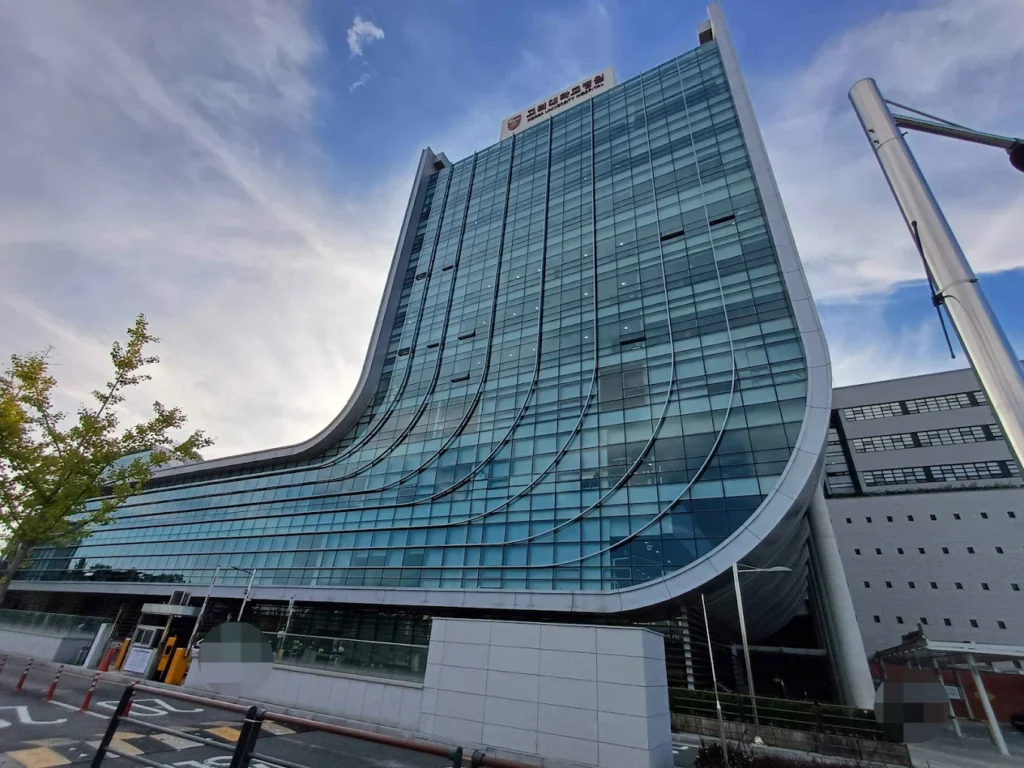
Hospital Overview
Korea University Anam Hospital traces its roots to 1928, when it was established as the Joseon Women’s Medical Training Center. The current Anam Hospital opened at its present campus in 1991 as part of the Korea University Medical Center. With nearly a century of institutional history, the hospital was founded on a tradition of philanthropy and providing care to the medically underserved.
Today, the hospital is a tertiary general specialty hospital with 1,051 beds, approximately 400 physicians, and over 2,100 total medical staff. It operates 36 clinical departments and 25+ specialized centers, including a Cancer Treatment Center, Cardiovascular Surgery Center, Organ Transplant Center, and a comprehensive Health Screening Center with tiered checkup programs ranging from $490 to $5,330.
Korea University Anam Hospital has earned Joint Commission International (JCI) accreditation five consecutive times since 2009. It was ranked 181st among the world’s best hospitals by Newsweek (2025), and its Gastroenterology Department was ranked 35th globally. The hospital was designated a Research-Focused Hospital by the Korean government and received FERCAP certification for ethical standards.
Specialties
Liver Transplant Center
Led by Professor Dong-Sik Kim. Over 500 liver transplant cases with a 100% 90-day survival rate (2018-2022), 96% at 1 year, and 85% at 5 years.
Robotic Thyroidectomy
Professor Hoon Yub Kim developed the world's first Transoral Robotic Thyroidectomy (TORT) in 2014 u2014 scarless thyroid surgery through the mouth. Over 1,500 robotic surgeries performed.
Cardiovascular Center
Professor Cheol-Woong Yu leads the TAVI program with over 280 procedures completed. Full range of cardiac interventions including minimally invasive heart surgery.
Gastroenterology
Ranked 35th in the world by Newsweek. A leader in advanced endoscopy and gastrointestinal disease management in Korea.
Urology (Robotic Surgery)
Ranks 1st in Asia for robotic surgical interventions for bladder cancer. Performed Asia's first robotic bladder replacement and pelvic lymphadenectomy.
Health Screening Center
Seven-tier checkup programs (Standard to VIP) ranging from $490 to $5,330. Same-day results with English-language reports for international patients.
International Patient Services
Comprehensive support from your first inquiry to post-treatment follow-up, coordinated by InKoreaNow.
International Healthcare Center
Established in 2008 with dedicated one-stop service for foreign patients. Contact: +82-2-920-5677.
Multilingual Coordinators
Full interpretation and coordination in English, Russian, Arabic, and Mongolian throughout your treatment journey.
Direct Insurance Billing
Partners with Tiecare, AXA, United Healthcare, Ping An, Bupa, and Cigna for seamless claims processing.
Airport Pickup Service
Arranged transport from Incheon International Airport directly to the hospital or your accommodation.
Dietary Accommodation
Customized nutrition with Western, Korean, Halal, and other dietary options available during your stay.
VIP Room Options
Standard, double, single, and VIP private rooms with on-site cafeteria, ATM, and grocery store.
Why Choose Korea University Anam Hospital
Five-Time JCI Accreditation
One of the longest continuously accredited hospitals in Korea (since 2009), guaranteeing international safety and quality standards at every level of care.
World-Leading Surgical Innovation
Home to the inventor of scarless robotic thyroid surgery (TORT), Asia's top robotic bladder cancer program, and a liver transplant center with 100% 90-day survival rates.
Full-Service International Support
Dedicated multilingual coordinators (English, Russian, Arabic, Mongolian), direct billing with global insurers (Bupa, Cigna, AXA, United Healthcare), and airport pickup.
Significant Cost Savings
Treatment costs 20-30% lower than comparable institutions in the US, UK, and Switzerland u2014 with no compromise on technology or outcomes.